Assateague Island National Seashore
Fast Facts
Assateague Island National Seashore
You will find Assateague Island National Seashore along the Maryland and Virginia coast, managed by the National Park Service as a seashore — open to visitors, but organized around conservation. Want to live on the edge? Visit a place recreated each day by ocean wind and waves.
Life on Assateague Island has adapted to an existence on the move. Explore sandy beaches, salt marshes, maritime forests and coastal bays. Rest, relax, recreate and enjoy some time on the edge of the continent.
The national seashore label at Assateague Island National Seashore signals protected coastline managed at a federal level. Expect fewer commercial services than a resort beach and more attention to ecology.
Key Highlights
- Animals
- Birds
- Fish
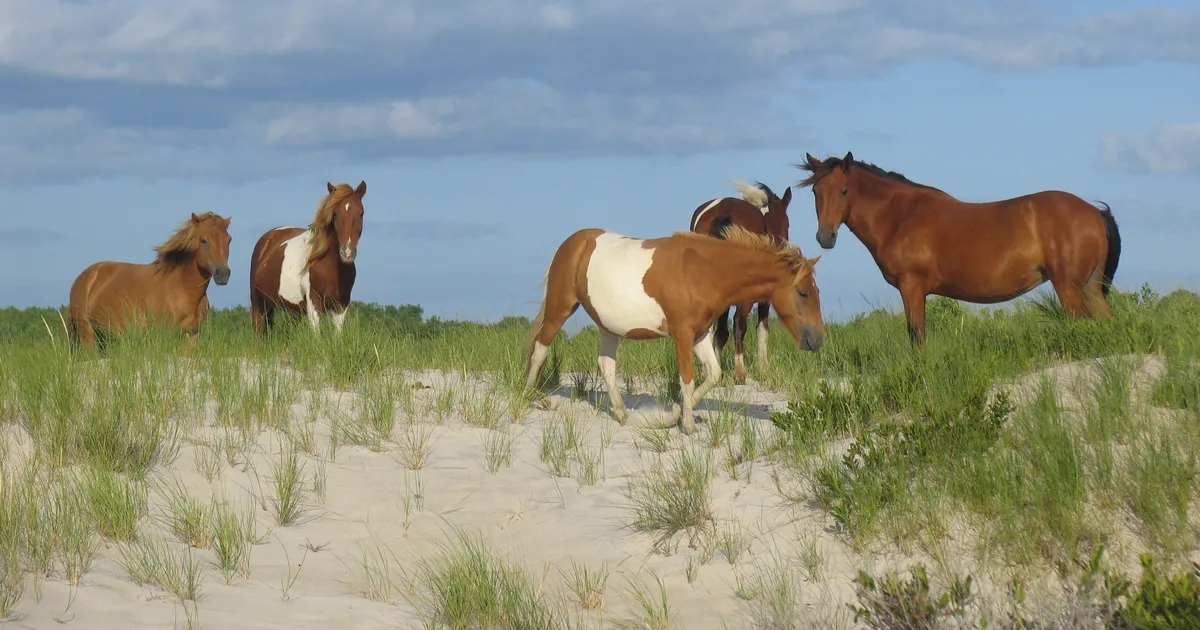
- Horses (wild)
- Tortoises and Turtles
- Climate Change
- Coasts, Islands and Atolls
Getting There
Reaching Assateague Island National Seashore is straightforward once you know the route. There are two entrances to Assateague Island National Seashore. Assateague's north entrance is at the end of Route 611, eight miles south of Ocean City, MD. The south entrance is at the end of Route 175, two miles east of Chincoteague, VA. There is no vehicle access between the two entrances on Assateague Island. Vehicles must return to the mainland to access either the north or south entrance.
By Car
Most visitors arrive by private vehicle or rental car. Road conditions vary with weather and construction, so check the park's alerts page the day before you travel. Pay attention to GPS directions in rural stretches—some apps route drivers onto unmaintained service roads rather than the signed park entrance.
Nearest Airports
Regional airports provide the most convenient access for long-distance travelers. For the most current airline service and driving distances, cross-reference flight options with the park's contact page. Budget extra drive time from any airport, especially if you arrive after dark or during winter weather.
Public Transit and Tours
Direct public transit is limited at most National Park Service sites, but guided day tours and shuttles sometimes operate from nearby cities during peak season. Rideshare options are often reliable in gateway towns but may drop off outside the park boundary rather than at specific trailheads or visitor centers.
For turn-by-turn directions and current road status, consult the park's official directions page: http://www.nps.gov/asis/planyourvisit/directions.htm.
Best Time to Visit
Weather shapes every visit. Spring: Often windy and cool with lows in the 40's and highs in the 60's. Summer: Hot and humid with lows in the 60's and highs in the 80's. Fall: Warm with lows in the 50's and highs in the 70's. Winter: Damp cold and often windy. Lows in the 20's, highs in the 40's.
Spring (March – May)
Spring offers cool ocean breezes, migrating birds, and quiet beaches before the summer rush arrives.
Summer (June – August)
Summer is peak beach season—warm water, long days, and the fullest lineup of programs, but also the largest crowds. Reserve campsites early.
Fall (September – November)
Fall is a favorite among regular visitors: warm water, empty beaches, and excellent fishing and birdwatching as migrations get underway.
Winter (December – February)
Winter is the most contemplative season, with stormy seas, beachcombing opportunities, and dramatically empty landscapes.
Activities and Adventures
Activities at Assateague Island National Seashore reflect the character of the site. The options below are drawn from the park's current published list—confirm availability and any required reservations before planning around a specific activity.
- Arts and Culture — ask at the visitor center for current conditions, reservations, and any required permits.
- Auto and ATV — ask at the visitor center for current conditions, reservations, and any required permits.
- Auto Off-Roading — ask at the visitor center for current conditions, reservations, and any required permits.
- Astronomy — ask at the visitor center for current conditions, reservations, and any required permits.
- Stargazing — ask at the visitor center for current conditions, reservations, and any required permits.
- Biking — confirm which roads and paths allow bikes and whether rentals are available in the gateway community.
- Camping — check campground availability and reservation windows in advance, especially on weekends and holidays.
- Backcountry Camping — check campground availability and reservation windows in advance, especially on weekends and holidays.
- Canoe or Kayak Camping — check campground availability and reservation windows in advance, especially on weekends and holidays.
- Car or Front Country Camping — check campground availability and reservation windows in advance, especially on weekends and holidays.
- Horse Camping (see also Horse/Stock Use) — check campground availability and reservation windows in advance, especially on weekends and holidays.
- Group Camping — check campground availability and reservation windows in advance, especially on weekends and holidays.
- RV Camping — check campground availability and reservation windows in advance, especially on weekends and holidays.
- Compass and GPS — ask at the visitor center for current conditions, reservations, and any required permits.
- Geocaching — ask at the visitor center for current conditions, reservations, and any required permits.
- Fishing — a state fishing license is typically required; check current regulations for species and gear limits.
- Saltwater Fishing — a state fishing license is typically required; check current regulations for species and gear limits.
- Guided Tours — schedules rotate seasonally; check the visitor center board on arrival for the current lineup.
- Hiking — trails range from short interpretive loops to longer, more demanding routes; match your choice to conditions and fitness.
- Backcountry Hiking — trails range from short interpretive loops to longer, more demanding routes; match your choice to conditions and fitness.
- Front-Country Hiking — trails range from short interpretive loops to longer, more demanding routes; match your choice to conditions and fitness.
- Off-Trail Permitted Hiking — trails range from short interpretive loops to longer, more demanding routes; match your choice to conditions and fitness.
- Horse Trekking — check trail designations and any stock requirements such as certified weed-free feed.
- Horse Camping (see also camping) — check campground availability and reservation windows in advance, especially on weekends and holidays.
- Horseback Riding — check trail designations and any stock requirements such as certified weed-free feed.
- Hunting and Gathering — ask at the visitor center for current conditions, reservations, and any required permits.
- Hunting — ask at the visitor center for current conditions, reservations, and any required permits.
- Paddling — water levels and wind shift quickly—plan around weather and consult rangers about current conditions.
- Canoeing — water levels and wind shift quickly—plan around weather and consult rangers about current conditions.
- Canoe or Kayak Camping — check campground availability and reservation windows in advance, especially on weekends and holidays.
- Kayaking — water levels and wind shift quickly—plan around weather and consult rangers about current conditions.
- Stand Up Paddleboarding — ask at the visitor center for current conditions, reservations, and any required permits.
- Junior Ranger Program — schedules rotate seasonally; check the visitor center board on arrival for the current lineup.
- Surfing — ask at the visitor center for current conditions, reservations, and any required permits.
- Swimming — designated swim areas are safer than open water; watch for current, cold water, and changing tides.
- Saltwater Swimming — designated swim areas are safer than open water; watch for current, cold water, and changing tides.
- Wildlife Watching — dawn and dusk are the most productive viewing windows; bring binoculars and maintain a respectful distance.
- Birdwatching — dawn and dusk are the most productive viewing windows; bring binoculars and maintain a respectful distance.
- Park Film — ask at the visitor center for current conditions, reservations, and any required permits.
- Shopping — ask at the visitor center for current conditions, reservations, and any required permits.
- Bookstore and Park Store — ask at the visitor center for current conditions, reservations, and any required permits.
Ranger-led programs are often the highest-value activity for first-time visitors, combining interpretation with access you might miss on your own. Check program schedules at the visitor center on arrival.
Wildlife and Natural Features
Although Assateague Island National Seashore is best known to many visitors for its recreation and scenery, it also protects the ecosystems that make those experiences possible.
Featured interpretive themes include Animals, Birds, Fish, Horses (wild), Tortoises and Turtles, Climate Change.
Habitats and Ecosystems
The park's habitats support a cross-section of regional wildlife. Observing species in their native context is one of the most rewarding—and most overlooked—reasons to slow down during a visit.
Viewing Wildlife Responsibly
Give animals room, never feed them, and store food properly where bears or other scavengers are present. Use binoculars or a telephoto lens for close-up views rather than approaching.
Night Skies and Quiet
Many NPS units are increasingly valued as dark-sky and natural-quiet refuges. If your visit overlaps with a clear, moonless night, step away from artificial lighting and let your eyes adjust.
Lodging and Camping
Lodging strategy depends on how long you plan to stay at Assateague Island National Seashore and what you want to do when you are not at the park.
Camping
The park offers camping as a recognized activity. Reservation systems, site availability, and amenities vary by campground, so confirm current rules at the park's website before arrival. Popular sites often fill during weekends and holidays; weekday visits increase your chance of first-come, first-served spots.
Gateway Towns and Nearby Lodging
Communities close to the park offer a mix of chain hotels, independent inns, vacation rentals, and—depending on location—bed-and-breakfasts. Several Maryland and Virginia towns serve as convenient bases, with restaurants, fuel, and grocery resupply. Book well ahead for summer weekends and major holidays.
Operating Hours and Seasons
Assateague Island National Seashore - Maryland District: Open year round, 24 hours a day.
Essential Information
Fees and Passes
- Entrance - Private Vehicle — $25.00: Assateague 7 day vehicle pass.
- Entrance - Motorcycle — $20.00: Valid for 7 days. Admits up to 2 private, non-commercial motorcycles with up to 4 total passengers.
- Entrance - Per Person — $0.00: Assateague per person walk-in or bicycle
Passes
- Annual Entrance - Park — $45.00: The Assateague Island National Seashore Annual Park Entrance Pass is $45.00. It is valid in both the Maryland District and Virginia District (Chincoteague National Wildlife Refuge).
Contact
- Phone: 4106411441
- Email: asis_information@nps.gov
- Official site: https://www.nps.gov/asis/index.htm
Safety
Carry water, sun protection, and layered clothing appropriate for the season. Cell coverage can be spotty in parts of the park—download offline maps before you leave your lodging. In an emergency, dial 911 or contact the nearest ranger station.
Services and Accessibility
Main visitor centers typically offer accessible restrooms, interpretive exhibits, bookstore sales, and ranger assistance. Accessibility varies by building and trail; contact the park ahead of time to discuss specific needs. Pets are often allowed on leash in designated areas only—check current rules before bringing animals.
Regulations to Know
Drones are prohibited in nearly all National Park Service units without a special permit. Metal detecting, collection of natural or cultural objects, and off-trail travel in sensitive areas are also commonly restricted. Read the signs at each trailhead and ask a ranger if you are unsure.
Leave Assateague Island National Seashore ready to come back. Most seashores work that way; this one is no exception.
Park Overview
Detailed overview of the park's history, geography, and main attractions will go here. This section provides essential background information for visitors.
Top Hikes
- Iconic Summit TrailDifficulty: Strenuous • Distance: 8 miles round trip
Loading reviews…
- Waterfall LoopDifficulty: Moderate • Distance: 3 miles loop
Loading reviews…
- Lakeside WalkDifficulty: Easy • Distance: 1.5 miles out & back
Loading reviews…
Recommended Hiking Gear
Gear up for your adventure with our trusted partners. These items help support the site at no extra cost to you!

Places to Stay
- Historic Park LodgeBook early!Type: Lodge
Loading reviews…
- Riverside CampgroundReservations required.Type: Campground
Loading reviews…
- Gateway Town Hotel15 miles from entrance.Type: Nearby Hotel
Loading reviews…