Petrified Forest National Park
Fast Facts
Petrified Forest National Park
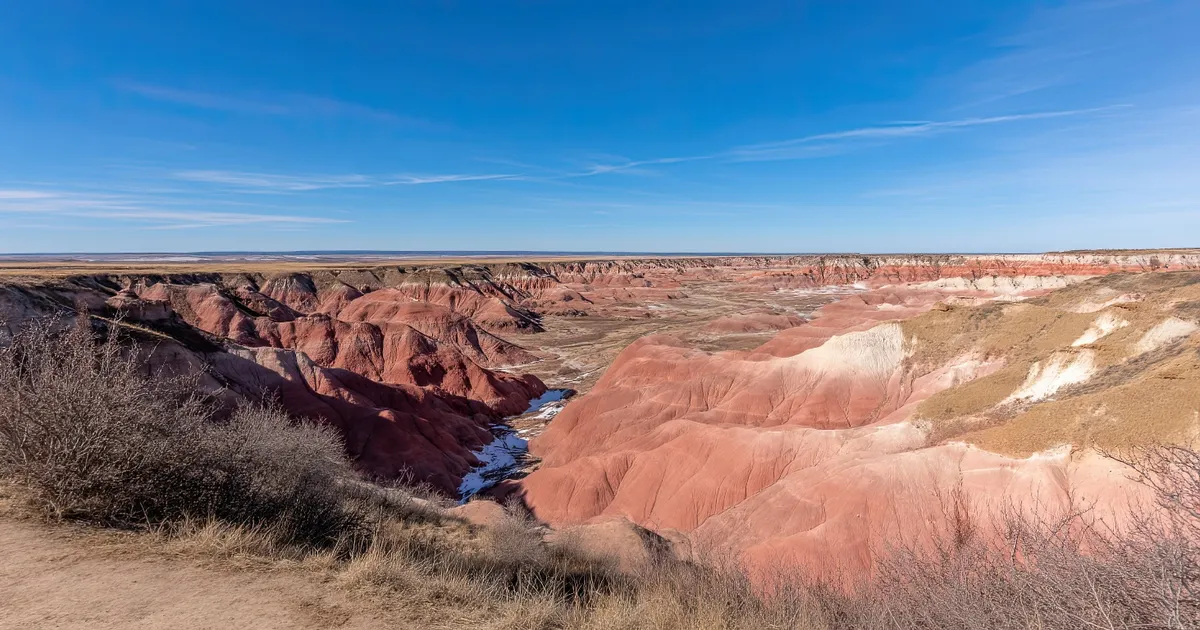
Petrified Forest National Park in northeastern Arizona showcases a remarkable duality along its 28-mile scenic drive. The northern section displays the sweeping badlands of the Painted Desert, where soft, multicolored hills stretch endlessly toward the horizon. Moving south, this ethereal landscape transforms into a concentrated display of Earth's geological treasures—scattered remnants of a 225-million-year-old forest now crystallized into brilliant rainbow-colored quartz. This linear journey through deep time encompasses over 52,000 acres of designated wilderness, preserving one of the world's most significant Late Triassic fossil records and a continuous human presence spanning 13,000 years.
The park's creation stems from an urgent conservation need in the early 1900s. Railroad expansion brought souvenir hunters and commercial collectors who were removing petrified wood by the ton, threatening to strip the landscape bare. Local residents successfully petitioned President Theodore Roosevelt, who designated it a national monument in 1906. Elevated to national park status in 1962 and expanded significantly in 2004, the park now protects not just the namesake petrified logs but an entire ecosystem frozen in time. The transformation from living trees to stone jewels required precise conditions: rapid burial by volcanic ash-laden sediments, groundwater rich in dissolved silica, and millions of years of molecular replacement that preserved microscopic wood structures while creating a spectrum of colors from trace minerals—iron for reds and yellows, manganese for purples and blues, carbon for blacks.
Key Highlights
- Painted Desert: Multi-hued badlands spanning northern section
- Petrified Wood Concentrations: World's largest colorful deposits
- Blue Mesa: Otherworldly blue bentonite clay formations
- Painted Desert Inn: National Historic Landmark with Hopi murals
- Route 66 Alignment: Only national park preserving the Mother Road
- Puerco Pueblo: 100-room ancestral site with petroglyphs
- Newspaper Rock: Over 650 ancient rock carvings
- Wilderness Backpacking: 50,000+ acres of trail-less backcountry
Getting There
The park straddles Interstate 40 in northeastern Arizona, with two entrances connected by the main park road.
North Entrance (I-40 Exit 311)
From Flagstaff (110 miles east)
- I-40 East for 110 miles
- Exit 311 (Painted Desert)
- Follow signs to visitor center
- 1.5-hour drive
- Best for east-to-west travel
South Entrance (US 180)
From Holbrook (18 miles)
- US 180 south from I-40
- Direct to Rainbow Forest entrance
- 20-minute drive
- Closest town with full services
From Show Low (90 miles)
- US 60 West to US 180 North
- Through Navajo and Apache lands
- 2-hour scenic drive
- Alternative southern approach
Gateway Communities
Holbrook
- 18 miles from south entrance
- Full range of hotels/motels
- Restaurants and grocery stores
- Historic Route 66 town
- Wigwam Motel landmark
Joseph City
- 25 miles from north entrance
- Limited services
- Budget lodging options
- Gas and basic supplies
Transportation Notes
- No public transit to park
- Rental cars available in Flagstaff
- RV-friendly but no camping in park
- 28-mile park road connects entrances
- One-way travel time: 45 minutes minimum
Best Time to Visit
Arizona's high desert climate creates distinct seasonal experiences, with elevation averaging 5,800 feet moderating extreme temperatures.
Fall: September-November
Optimal Conditions
- Temperatures: 40-75°F
- Minimal crowds
- Clear, stable weather
- Excellent photography light
- Comfortable hiking conditions
Spring: March-May
Wildflower Season
- Temperatures: 35-70°F
- Desert blooms peak April-May
- Increasing visitation
- Strong winds common
- Variable weather patterns
Summer: June-August
Monsoon Period
- Temperatures: 55-100°F+
- Afternoon thunderstorms
- Flash flood risk
- Peak visitation
- Dramatic cloud formations
Winter: December-February
Quiet Season
- Temperatures: 20-50°F
- Potential light snow
- Fewest visitors
- Shorter daylight hours
- Road conditions generally good
Climate Considerations
- High elevation (5,800 feet average)
- 50-degree daily temperature swings
- Intense UV exposure year-round
- Low humidity (10-30%)
- Wind strongest March-May
Activities and Adventures
The park offers experiences ranging from scenic drives to wilderness backpacking, all accessible from the main park road.
The 28-Mile Park Road Journey
Northern Section Highlights
- Painted Desert Overlooks: Multiple viewpoints (Tiponi, Tawa, Kachina Points)
- Painted Desert Rim Trail: 1-mile easy walk between overlooks
- Painted Desert Inn: Museum with Hopi murals, CCC architecture
- Route 66 Alignment: 1932 Studebaker marks historic road
Central Transition Zone
- Puerco Pueblo Trail: 0.3-mile loop through ancestral ruins
- Newspaper Rock: Viewing scopes for 650+ petroglyphs
- The Tepees: Distinctive cone-shaped badland formations
- Blue Mesa Loop: 3.5-mile scenic drive to trailhead
Southern Petrified Wood Area
- Agate Bridge: 110-foot petrified log spanning ravine
- Jasper Forest Overlook: Valley floor covered with logs
- Crystal Forest Trail: 0.75-mile paved loop, crystalline specimens
- Rainbow Forest Museum: Paleontology exhibits, visitor services
Hiking Trails
Easy Walks
- Giant Logs Trail: 0.4 miles behind museum, largest specimens
- Painted Desert Rim: 1 mile between visitor center and inn
- Puerco Pueblo: 0.3 miles through prehistoric village
Moderate Trails
- Blue Mesa Trail: 1-mile loop, steep descent into badlands
- Crystal Forest: 0.75 miles through crystal-rich logs
- Long Logs Trail: 1.6 miles through ancient log jam
- Agate House: 2 miles round trip to petrified wood pueblo
Challenging Routes
- Jasper Forest: 2.5 miles unmaintained into valley floor
- Wilderness hiking: Off-trail exploration allowed
Wilderness Backpacking
Unique Opportunity
- 50,000+ acres of trail-less wilderness
- Free permits (same-day availability)
- No lottery or advance reservations
- True solitude experience
Requirements
- Camp 1+ miles from roads
- Carry all water (1 gallon/person/day)
- No fires permitted
- Leave No Trace principles
- Navigation skills essential
Photography
Prime Locations
- Blue Mesa badlands (best morning light)
- Painted Desert overlooks (sunset colors)
- Crystal Forest (macro opportunities)
- The Tepees (dramatic formations)
Cultural and Historical Significance
The park preserves 13,000 years of continuous human presence alongside its geological wonders.
Archaeological Sites
Puerco Pueblo
- Occupied 1250-1380 CE
- 100+ room community
- Solar calendar petroglyph
- Major trade center
- River valley agriculture
Agate House
- Eight-room pueblo
- Built entirely of petrified wood
- Occupied 1050-1300 CE
- Partially reconstructed 1930s
- Unique architectural adaptation
Petroglyph Legacy
Newspaper Rock
- Over 650 individual images
- Multiple cultural periods
- Clan symbols and calendars
- Spiritual significance
- Viewing telescopes provided
Historic Route 66
Mother Road Heritage
- Original 1926-1958 alignment
- Only national park preserving Route 66
- 1932 Studebaker installation
- Evolution of American road travel
- Connection to national story
Painted Desert Inn
Architectural Treasure
- 1920s origin as Stone Tree House
- 1930s CCC Pueblo Revival redesign
- 1947 Fred Harvey Company era
- Fred Kabotie Hopi murals
- National Historic Landmark
Wildlife and Natural Features
Despite its arid appearance, the park supports diverse life adapted to high desert conditions.
Wildlife
Mammals
- Pronghorn antelope
- Coyotes
- Bobcats
- Desert cottontails
- Black-tailed jackrabbits
- Various bat species
Birds
- Over 200 species recorded
- Golden eagles
- Prairie falcons
- Roadrunners
- Ravens
- Seasonal migrants
Reptiles
- Collared lizards
- Prairie rattlesnakes
- Bull snakes
- Various whiptails
Geological Features
Chinle Formation
- Primary rock layer
- 225-million-year-old deposits
- River and lake sediments
- Volcanic ash components
- Source of petrified wood
Erosion Processes
- Bentonite clay expansion/contraction
- Flash flood carving
- Wind sculpting
- Ongoing fossil exposure
- Active landscape change
Essential Information
Park Operations
Hours
- Daily: 8:00 AM - 5:00 PM (MST)
- Arizona doesn't observe DST
- Closed Christmas Day
- Extended summer hours possible
Entrance Fees
- Vehicle: $25 (7 days)
- Motorcycle: $20
- Individual: $15
- Annual Pass: $45
- Cashless only (credit/debit cards)
Visitor Centers
Painted Desert Visitor Center
- North entrance location
- Main orientation facility
- Cafeteria and gift shop
- Wilderness permits
- Restrooms and water
Rainbow Forest Museum
- South entrance location
- Paleontology focus
- Gift shop with snacks
- Restrooms and water
- Giant Logs Trail access
Services and Amenities
In-Park Facilities
- No lodging available
- No campgrounds
- Limited food service
- Gift shops at both ends
- Water at visitor centers only
Nearby Services
- Holbrook: Full services 18 miles
- Joseph City: Basic services 25 miles
- Flagstaff: Major city 110 miles
Safety Warnings
Desert Hazards
- Extreme temperature swings
- Dehydration risk high
- Flash floods in washes
- No shade on trails
- Rattlesnakes present
Elevation Effects
- 5,800 feet average
- Reduced oxygen levels
- Increased UV exposure
- Rapid weather changes
- Acclimatization needed
Critical Regulations
Petrified Wood Protection
- Collection strictly prohibited
- Federal crime with fines
- "Curse" folklore reinforces rule
- Purchase only from authorized shops
- Preservation for future generations
Wilderness Ethics
- Stay on designated trails
- Pack out all trash
- No camping except backcountry
- Drone use prohibited
- Respect cultural sites
What to Bring
Essential Gear
- Water (1 gallon/person/day)
- Sun protection (hat, sunscreen)
- Sturdy footwear
- Snacks/lunch
- Camera with extra batteries
Seasonal Additions
- Layers (all seasons)
- Rain gear (summer monsoons)
- Warm jacket (winter)
- Binoculars for petroglyphs
Petrified Forest National Park offers a unique journey through time, where visitors traverse 225 million years of Earth's history in a single day. From the sweeping vistas of the Painted Desert to the crystalline beauty of ancient logs turned to stone, the park reveals the power of geological processes and the resilience of life in the high desert. Its protection arose from the recognition that these finite treasures—once lost to collectors—could never be replaced. Today, the park stands as testament to successful conservation, preserving not just rainbow wood and painted hills, but a complete record of deep time, human heritage, and ongoing natural processes that continue to shape this extraordinary landscape.
Park Overview
Detailed overview of the park's history, geography, and main attractions will go here. This section provides essential background information for visitors.
Top Hikes
- Iconic Summit TrailDifficulty: Strenuous • Distance: 8 miles round trip
Loading reviews…
- Waterfall LoopDifficulty: Moderate • Distance: 3 miles loop
Loading reviews…
- Lakeside WalkDifficulty: Easy • Distance: 1.5 miles out & back
Loading reviews…
Recommended Hiking Gear
Gear up for your adventure with our trusted partners. These items help support the site at no extra cost to you!

Places to Stay
- Historic Park LodgeBook early!Type: Lodge
Loading reviews…
- Riverside CampgroundReservations required.Type: Campground
Loading reviews…
- Gateway Town Hotel15 miles from entrance.Type: Nearby Hotel
Loading reviews…