Fort McHenry National Monument and Historic Shrine
Fast Facts
Fort McHenry National Monument and Historic Shrine
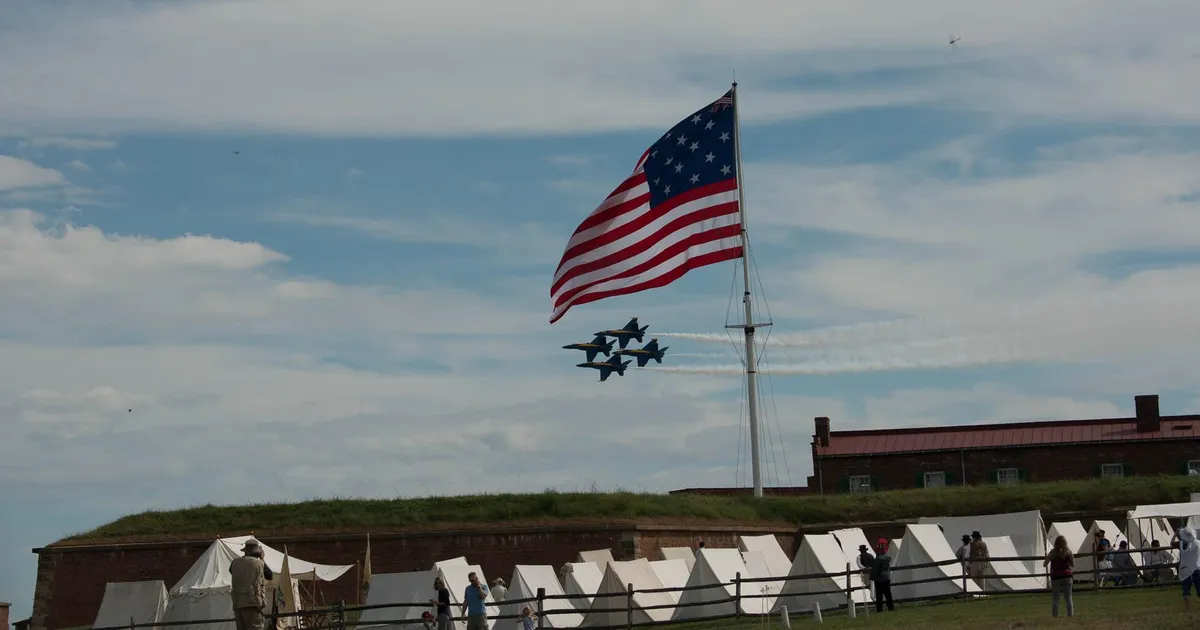
Fort McHenry National Monument and Historic Shrine, a national monument tucked into Maryland, is one of those NPS sites that tends to exceed expectations for visitors who slow down and look closely. by the dawn's early light, a large red, white and blue banner? Whose broad stripes and bright stars... were so gallantly streaming...over Fort McHenry!
The valiant defense of the fort during the Battle of Baltimore on September 13-14, 1814 inspired Francis Scott Key to write the words that became the U.S. national anthem. The fort's history holds many other stories too, from the Civil War to WWII.
National monuments are, by design, more focused than national parks. At Fort McHenry National Monument and Historic Shrine, that focus is part of the appeal: you can absorb what the site protects in the time you have.
Key Highlights
- Architecture and Building
- African American Heritage
- American Revolution
- Archeology
- Shopping
- Citizen Science
- Biking
Getting There
Reaching Fort McHenry National Monument and Historic Shrine is straightforward once you know the route. The park is three miles southeast of the Baltimore Inner Harbor and just off I-95. Follow the brown Fort McHenry directional signs along all major routes to the park. From I-95 northbound, take Exit 55 Key Highway and follow Fort McHenry signs.
By Car
Most visitors arrive by private vehicle or rental car. Road conditions vary with weather and construction, so check the park's alerts page the day before you travel. Pay attention to GPS directions in rural stretches—some apps route drivers onto unmaintained service roads rather than the signed park entrance.
Nearest Airports
Regional airports provide the most convenient access for long-distance travelers. For the most current airline service and driving distances, cross-reference flight options with the park's contact page. Budget extra drive time from any airport, especially if you arrive after dark or during winter weather.
Public Transit and Tours
Direct public transit is limited at most National Park Service sites, but guided day tours and shuttles sometimes operate from nearby cities during peak season. Rideshare options are often reliable in gateway towns but may drop off outside the park boundary rather than at specific trailheads or visitor centers.
For turn-by-turn directions and current road status, consult the park's official directions page: http://www.nps.gov/fomc/planyourvisit/directions.htm.
Best Time to Visit
Weather shapes every visit. Temperatures and weather in the spring and fall months tend to be mild. Ice, snow, and freezing temperatures can occur during winter. Extreme heat can occur during the summer months. Inclement weather may impact park hours of operation year round. Refer to the park alerts or call ahead to confirm operating hours.
Spring (March – May)
Spring offers wildflowers, mild temperatures, and manageable crowds before the summer peak.
Summer (June – August)
Summer means longer days and fuller ranger programming, balanced by heat and higher visitation. Start early to beat both.
Fall (September – November)
Fall is often the sweet spot—cooler temperatures, sharper light for photography, and fewer visitors on trails.
Winter (December – February)
Winter brings solitude and, in many regions, a different character to the landscape. Expect reduced hours at some facilities.
Activities and Adventures
Activities at Fort McHenry National Monument and Historic Shrine reflect the character of the site. The options below are drawn from the park's current published list—confirm availability and any required reservations before planning around a specific activity.
- Arts and Culture — ask at the visitor center for current conditions, reservations, and any required permits.
- Craft Demonstrations — ask at the visitor center for current conditions, reservations, and any required permits.
- Cultural Demonstrations — ask at the visitor center for current conditions, reservations, and any required permits.
- Live Music — ask at the visitor center for current conditions, reservations, and any required permits.
- Theater — ask at the visitor center for current conditions, reservations, and any required permits.
- Biking — confirm which roads and paths allow bikes and whether rentals are available in the gateway community.
- Road Biking — confirm which roads and paths allow bikes and whether rentals are available in the gateway community.
- Compass and GPS — ask at the visitor center for current conditions, reservations, and any required permits.
- Geocaching — ask at the visitor center for current conditions, reservations, and any required permits.
- Food — ask at the visitor center for current conditions, reservations, and any required permits.
- Picnicking — ask at the visitor center for current conditions, reservations, and any required permits.
- Guided Tours — schedules rotate seasonally; check the visitor center board on arrival for the current lineup.
- Self-Guided Tours - Walking — schedules rotate seasonally; check the visitor center board on arrival for the current lineup.
- Hands-On — ask at the visitor center for current conditions, reservations, and any required permits.
- Citizen Science — ask at the visitor center for current conditions, reservations, and any required permits.
- Arts and Crafts — ask at the visitor center for current conditions, reservations, and any required permits.
- Hiking — trails range from short interpretive loops to longer, more demanding routes; match your choice to conditions and fitness.
- Living History — ask at the visitor center for current conditions, reservations, and any required permits.
- Reenactments — ask at the visitor center for current conditions, reservations, and any required permits.
- Historic Weapons Demonstration — ask at the visitor center for current conditions, reservations, and any required permits.
- First Person Interpretation — ask at the visitor center for current conditions, reservations, and any required permits.
- Paddling — water levels and wind shift quickly—plan around weather and consult rangers about current conditions.
- Kayaking — water levels and wind shift quickly—plan around weather and consult rangers about current conditions.
- Junior Ranger Program — schedules rotate seasonally; check the visitor center board on arrival for the current lineup.
- Skiing — winter routes require appropriate gear and layered clothing; conditions shift rapidly with storms.
- Cross-Country Skiing — winter routes require appropriate gear and layered clothing; conditions shift rapidly with storms.
- Downhill Skiing — winter routes require appropriate gear and layered clothing; conditions shift rapidly with storms.
- Wildlife Watching — dawn and dusk are the most productive viewing windows; bring binoculars and maintain a respectful distance.
- Birdwatching — dawn and dusk are the most productive viewing windows; bring binoculars and maintain a respectful distance.
- Park Film — ask at the visitor center for current conditions, reservations, and any required permits.
- Museum Exhibits — the visitor center is the best first stop for context, maps, and current program information.
- Shopping — ask at the visitor center for current conditions, reservations, and any required permits.
- Bookstore and Park Store — ask at the visitor center for current conditions, reservations, and any required permits.
- Gift Shop and Souvenirs — ask at the visitor center for current conditions, reservations, and any required permits.
Ranger-led programs are often the highest-value activity for first-time visitors, combining interpretation with access you might miss on your own. Check program schedules at the visitor center on arrival.
History and What to See
Fort McHenry National Monument and Historic Shrine is primarily a site of historical and cultural significance. Beyond the headline landmarks, the park preserves smaller details—inscriptions, outbuildings, period plantings, wayside exhibits—that repay an unhurried visit.
Featured interpretive themes include Architecture and Building, African American Heritage, American Revolution, Archeology, Ruins, Arts.
Interpretation and Programs
Ranger talks, living-history demonstrations, and self-guided audio tours bring the story to life. If your schedule allows, time your visit to catch at least one ranger-led program; the added context transforms what you see on the grounds.
Preserved Structures and Landscape
The National Park Service preserves the physical setting as faithfully as possible. Walking the grounds gives you a sense of scale—distances, sightlines, elevation—that is hard to appreciate from photos alone.
Research and Archives
Many historic sites maintain libraries, archives, or partnered research centers. If you have a specific interest, contact the park in advance; staff can often point you toward documents, oral histories, or special collections.
Lodging and Camping
Lodging strategy depends on how long you plan to stay at Fort McHenry National Monument and Historic Shrine and what you want to do when you are not at the park.
On-Site Stays
Overnight accommodations inside the park's boundary are limited or not offered here. Most visitors stay in nearby towns and commute in each day.
Gateway Towns and Nearby Lodging
Communities close to the park offer a mix of chain hotels, independent inns, vacation rentals, and—depending on location—bed-and-breakfasts. Several Maryland towns serve as convenient bases, with restaurants, fuel, and grocery resupply. Book well ahead for summer weekends and major holidays.
Operating Hours and Seasons
Fort McHenry National Monument and Historic Shrine: Park Grounds and Parking lot: 9:00 a.m. - 5:00 p.m.
Park registers for purchasing Star Fort Historic Zone entry or America The Beautiful Passes are open from 9:00 a.m. to 4:00 p.m. daily.
Star Fort, Visitor Center, gift shop, and restrooms close 15 minutes before the park closes. Closing times indicate when the gates will be close; all visitors must exit by this time.
Essential Information
Fees and Passes
- Entrance - Per Person — $15.00: Access to the historic zone (where the star fort is located) requires an entrance fee.
- Entrance - Non-commercial Groups — $15.00: There is no group rate for the entrance fee. All groups must pay $15 per adult. Children in the groups are free, however, they must be accompanied by an adult in the historic zone. Interagency passes are allowed to be used to assist with gr…
- Commercial Entrance - Per Person — $15.00: All commercial groups wishing to visitor Fort McHenry NM&HS must first obtain a Commercial Use Authorization (CUA). Groups with an active CUA are subject to the same $15 per person fee to enter the historic zone, however their employees con…
Passes
- Annual Entrance - Park — $45.00: The Fort McHenry Annual Pass covers the pass holder plus three adults to enter the Fort McHenry NM & HS Historic Zone for 12 months. The pass is both available at the park visitor center, or a digital version is availabl…
Contact
- Phone: 4109624290
- Email: FOMC_Interpretation@nps.gov
- Official site: https://www.nps.gov/fomc/index.htm
Safety
Carry water, sun protection, and layered clothing appropriate for the season. Cell coverage can be spotty in parts of the park—download offline maps before you leave your lodging. In an emergency, dial 911 or contact the nearest ranger station.
Services and Accessibility
Main visitor centers typically offer accessible restrooms, interpretive exhibits, bookstore sales, and ranger assistance. Accessibility varies by building and trail; contact the park ahead of time to discuss specific needs. Pets are often allowed on leash in designated areas only—check current rules before bringing animals.
Regulations to Know
Drones are prohibited in nearly all National Park Service units without a special permit. Metal detecting, collection of natural or cultural objects, and off-trail travel in sensitive areas are also commonly restricted. Read the signs at each trailhead and ask a ranger if you are unsure.
A visit to Fort McHenry National Monument and Historic Shrine is often short but far from shallow. Let the site's focus work for you and the monument tends to make sense.
Park Overview
Detailed overview of the park's history, geography, and main attractions will go here. This section provides essential background information for visitors.
Top Hikes
- Iconic Summit TrailDifficulty: Strenuous • Distance: 8 miles round trip
Loading reviews…
- Waterfall LoopDifficulty: Moderate • Distance: 3 miles loop
Loading reviews…
- Lakeside WalkDifficulty: Easy • Distance: 1.5 miles out & back
Loading reviews…
Recommended Hiking Gear
Gear up for your adventure with our trusted partners. These items help support the site at no extra cost to you!

Places to Stay
- Historic Park LodgeBook early!Type: Lodge
Loading reviews…
- Riverside CampgroundReservations required.Type: Campground
Loading reviews…
- Gateway Town Hotel15 miles from entrance.Type: Nearby Hotel
Loading reviews…