Olympic National Park
Fast Facts
Olympic National Park
Olympic National Park stands as one of the Pacific Northwest's most diverse and spectacular wilderness areas, encompassing nearly one million acres of extraordinary ecosystems across Washington's Olympic Peninsula. Designated as both a UNESCO World Heritage Site and an International Biosphere Reserve, the park protects three dramatically different environments: glacier-capped mountains, ancient temperate rainforests, and 73 miles of rugged Pacific coastline. This remarkable convergence of ecosystems creates a "living laboratory" where visitors can experience alpine meadows, moss-draped forest halls, and wild ocean shores all within the same day.
With over 95% of its vast expanse designated as wilderness, Olympic offers unparalleled opportunities for solitude and pristine nature experiences. The park's character transforms dramatically with the seasons, from spring wildflower blooms and summer alpine access to fall salmon runs and winter storm watching. Home to the largest unmanaged herd of Roosevelt elk in the Pacific Northwest and supporting over 1,000 plant species, Olympic represents one of the most biodiverse temperate ecosystems in North America.
Key Highlights
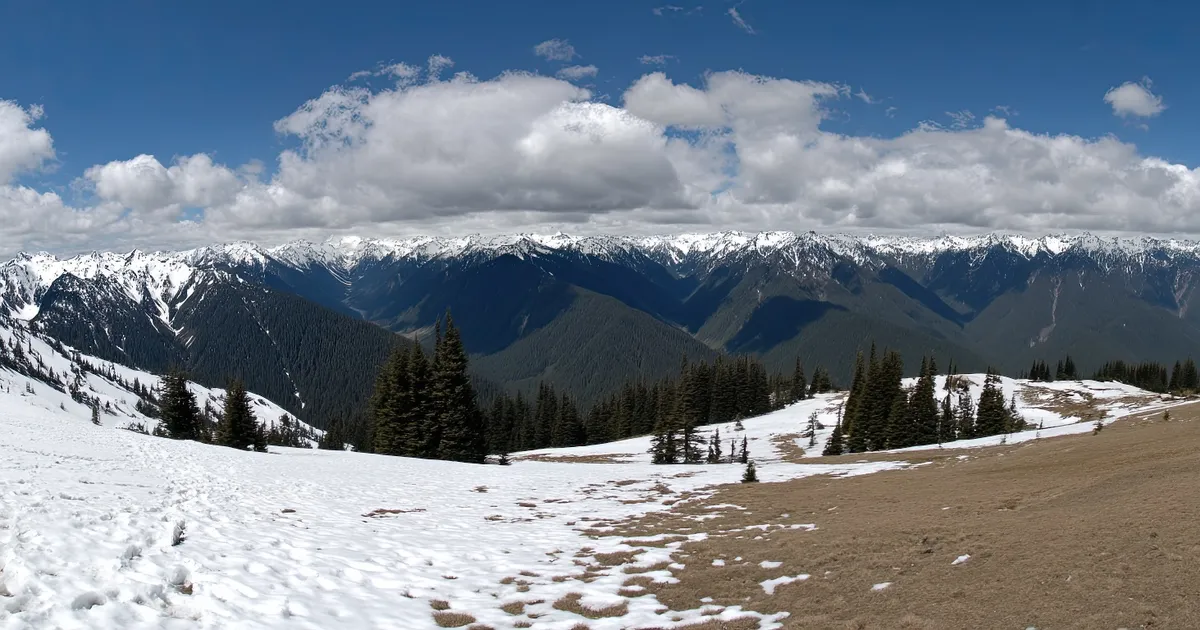
- Hurricane Ridge: High-elevation viewpoint offering panoramic mountain vistas and alpine meadows
- Hoh Rainforest: Cathedral-like temperate rainforest with moss-draped giants and ethereal beauty
- Rialto Beach and Hole-in-the-Wall: Dramatic coastal scenery with sea stacks and tide pools
- Sol Duc Hot Springs: Natural mineral hot springs nestled in old-growth forest
- Lake Crescent: Glacially-carved lake surrounded by towering peaks
- Marymere Falls: Spectacular 90-foot waterfall accessible via easy trail
- Ruby Beach: Famous for reddish sands, sea stacks, and massive driftwood logs
Getting There
Olympic National Park's location on the Olympic Peninsula requires careful route planning, as no roads cross through the park's mountainous interior. Access is primarily via U.S. Highway 101, which loops around the peninsula, with various spur roads leading into different park regions.
Main Access Routes
From Seattle Area via Ferry (Most Scenic)
- Take Washington State Ferry from Seattle to Bainbridge Island or Edmonds to Kingston
- Vehicle ferry fare approximately $23.20 one-way (plus $10.25 per additional passenger)
- Connect to Highway 104, then Highway 101 around the peninsula
- Total travel time: 2-4 hours depending on destination
From Seattle via I-5 (No Ferry)
- Take I-5 South to Olympia, then US-101 North and West
- Longer driving distance but avoids ferry scheduling
- Total travel time: 2.5-4 hours to various park entrances
From Portland, Oregon
- Take I-5 North to Olympia, then US-101 West
- Distance: 280-350 miles depending on final destination
- Travel time: 4.5-6 hours
Major Park Access Roads
Hurricane Ridge Road (Port Angeles)
- 17-mile scenic drive to 5,242-foot elevation
- Open year-round, but winter access limited to weekends (tire chains required)
- Provides access to alpine hiking and mountain views
Upper Hoh Road
- 18-mile road from Highway 101 to Hoh Rainforest Visitor Center
- Access to famous rainforest trails and Roosevelt elk viewing
- Recently reopened after major washout repairs (May 2025)
Sol Duc Road
- 14-mile paved road to Sol Duc Hot Springs Resort and waterfalls
- Gateway to high-elevation wilderness areas
- Open seasonally, typically closed in winter
Lake Crescent Area
- Multiple access points along Highway 101's northern shore
- Storm King Ranger Station and Lake Crescent Lodge
- Year-round access to lakeside activities and trails
Transportation Considerations
- Cellular service extremely limited throughout park
- Fill gas tank before entering remote areas
- Download offline maps before arrival
- Check road conditions: (360) 565-3131
- Clallam Transit offers summer bus service to Hurricane Ridge
Best Time to Visit
Olympic's diverse ecosystems create distinct seasonal experiences, each offering unique advantages and challenges. Weather patterns vary dramatically between coastal, rainforest, and mountain areas.
Summer Season: July-August
Advantages:
- Driest and warmest weather (60-75°F in lowlands)
- All facilities and roads typically open
- Peak alpine wildflower displays
- Best conditions for backpacking and high-elevation hiking
- Full ranger program schedules
- Ideal for photography with long daylight hours
Considerations:
- Peak visitation with significant crowds
- Parking lots fill early at popular destinations
- Higher accommodation rates and limited availability
- Morning coastal fog common
- Reservations essential for camping and lodging
Spring Season: April-June
Advantages:
- Wildflower blooms progress from lowlands to alpine areas
- Waterfalls at peak flow from snowmelt
- Migratory birds return to the park
- Gray whale northbound migration visible from coast
- Fewer crowds than summer peak
Considerations:
- Highly unpredictable weather with frequent rain
- Mountain roads may remain closed due to snow
- High-elevation trails inaccessible until late June or July
- Stream crossings can be challenging due to snowmelt
Fall Season: September-November
Advantages:
- Spectacular salmon runs in park rivers
- Roosevelt elk rutting season with bugling displays
- Beautiful autumn colors in deciduous trees
- Gray whale southbound migration
- Pleasant temperatures with fewer crowds
Considerations:
- Increasing precipitation, especially after mid-October
- Shorter daylight hours
- Some facilities begin reducing hours
- Mountain weather becomes more unpredictable
Winter Season: December-March
Advantages:
- Dramatic storm watching along the coast
- Winter sports opportunities at Hurricane Ridge
- Rainforests at their most lush and vibrant
- Greatest solitude with minimal crowds
- Unique photography opportunities
Considerations:
- Heavy rainfall (140-170 inches annually in western areas)
- Many high-elevation roads closed
- Limited facility hours and services
- Hurricane Ridge Road open only Friday-Sunday (weather permitting)
- Challenging driving conditions requiring tire chains
Adventures and Activities
Olympic's three distinct ecosystems provide diverse recreational opportunities ranging from gentle nature walks to challenging wilderness expeditions.
Hiking and Trail Experiences
Iconic Rainforest Trails
Hall of Mosses Trail (0.8 miles, easy)
- Accessible loop through moss-draped bigleaf maples
- Ethereal atmosphere with cathedral-like forest
- Wheelchair accessible boardwalk sections
- Best experienced during misty conditions
Spruce Nature Trail (1.2 miles, easy)
- Follows Hoh River through diverse forest types
- Opportunities to spot Roosevelt elk
- Interpretive signs explain rainforest ecology
- Connects to longer Hoh River Trail
Quinault Nature Trails
- Multiple short loops around Lake Quinault
- Maple Glade Trail showcases massive bigleaf maples
- Kestner Homestead Trail reveals area's settlement history
- Less crowded alternative to Hoh area
Mountain and Alpine Trails
Hurricane Hill Trail (3.2 miles roundtrip, moderate)
- Paved trail with 650-foot elevation gain
- Panoramic views of Olympic Mountains and Strait of Juan de Fuca
- Spectacular wildflower displays in summer
- First 0.5 miles wheelchair accessible
Sol Duc Falls Trail (1.6 miles roundtrip, easy)
- Popular walk to picturesque three-tiered waterfall
- Well-maintained trail through old-growth forest
- Connects to longer wilderness routes
- Excellent for families and photography
Coastal Adventures
Rialto Beach to Hole-in-the-Wall (3-4 miles roundtrip)
- Dramatic beach walk to natural sea arch
- Tide-dependent access through the "hole"
- Excellent tide pooling opportunities
- Critical: Check tide charts before departure
Second and Third Beach Trails (near La Push)
- Short forest hikes leading to pristine sandy beaches
- Sea stack formations and tide pools
- Opportunities for beach camping
- Second Beach: 0.7 miles, Third Beach: 1.4 miles
Water Activities
Lake Recreation
- Lake Crescent and Lake Quinault offer kayaking, canoeing, and paddleboarding
- Boat rentals available at Lake Crescent Lodge and Log Cabin Resort
- Cold water temperatures require appropriate gear and caution
- Personal flotation devices required by law
Coastal Exploration
- Sea kayaking for experienced paddlers
- Challenging conditions with cold water and strong currents
- Wet or dry suits essential due to hypothermia risk
- Weather conditions change rapidly
Wildlife Viewing Opportunities
Roosevelt Elk
- Best viewing in Hoh, Quinault, and Sol Duc valleys
- Most active during dawn and dusk feeding periods
- Fall rutting season (September-October) offers dramatic bugling displays
- Maintain minimum 75-foot distance for safety
Marine Mammals
- Harbor seals and sea lions visible from coastal viewpoints
- Sea otters in kelp beds along rocky shores
- Gray whale migrations: April-May (northbound), October-November (southbound)
- Best viewing from headlands like Cape Flattery
Salmon Runs
- Coho salmon at Salmon Cascades (Sol Duc) in October
- Multiple species in Hoh, Queets, and Quinault rivers
- Peak viewing September through December
- Critical ecological event supporting entire ecosystem
Specialized Activities
Tide Pooling
- Best during low tides, especially "minus tides" below 1 foot
- Kalaloch Beach 4 and Rialto Beach offer excellent opportunities
- Discover sea stars, anemones, crabs, and other marine life
- Observe tide charts carefully to avoid being trapped
Stargazing
- Excellent dark sky conditions away from developed areas
- Hurricane Ridge offers ranger-led astronomy programs
- Best viewing during new moon periods
- Coastal fog may limit visibility in western areas
Hot Springs Experience
- Sol Duc Hot Springs Resort offers natural mineral pools
- Day use available for non-guests ($18 adults, 1.5-hour sessions)
- Three mineral pools plus one freshwater pool
- Open seasonally, typically March through October
Wildlife and Ecosystems
Olympic's remarkable biodiversity results from its varied elevations, climates, and protection of intact ecosystems across multiple environmental zones.
Signature Wildlife Species
Roosevelt Elk Olympic hosts the largest unmanaged herd of Roosevelt elk in the Pacific Northwest, with approximately 5,000 individuals. These magnificent animals, the largest elk subspecies, are frequently observed in lowland valleys, particularly around the Hoh, Quinault, and Sol Duc rivers. Bulls can weigh up to 1,100 pounds and produce haunting bugle calls during fall rutting season.
Black Bears The park's black bear population remains healthy, though bears are generally shy and avoid human contact. Proper food storage is mandatory, with bear canisters required in many backcountry areas. Bears are omnivorous, feeding on berries, salmon, and vegetation throughout their active season.
Olympic Marmots These endemic, large ground squirrels inhabit alpine and subalpine meadows, particularly around Hurricane Ridge. Active only during snow-free months, they hibernate through the long mountain winters. Their distinctive whistles often alert hikers to their presence.
Marine Wildlife The park's coastal waters support diverse marine life including harbor seals, Steller and California sea lions, and recovering sea otter populations. Gray whales migrate past the coast twice yearly, while various seabirds including tufted puffins nest on offshore rocks and islands.
Forest Ecosystems
Temperate Rainforest Olympic's western valleys contain some of the world's finest temperate rainforests, sustained by 140-170 inches of annual precipitation. Towering Sitka spruce and western hemlock create cathedral-like spaces, while bigleaf maples support thick epiphytic communities of mosses and ferns. These forests represent some of the most biomass-dense ecosystems on Earth.
Old-Growth Characteristics
- Trees exceeding 300 feet in height and 800+ years in age
- Complex multi-layered canopy structure
- Massive fallen logs supporting diverse plant communities
- Unique microclimates supporting specialized species
Mountain Forests Higher elevations support different forest types adapted to cooler, drier conditions. Douglas fir dominates middle elevations, while subalpine fir and mountain hemlock characterize high-elevation zones. Ancient bristlecone pines cling to exposed ridges at treeline.
Coastal Ecosystems
The park's 73 miles of wild coastline support unique plant and animal communities adapted to salt spray, extreme weather, and tidal fluctuations. Rocky intertidal zones harbor incredibly diverse communities visible during low tides, while sandy beaches provide nesting habitat for various shorebird species.
Tidal Zone Species
- Purple and ochre sea stars
- Giant green anemones
- Various crab species
- Colorful marine algae
- Barnacles and mussels
Lodging and Accommodations
Olympic's remote location and seasonal accessibility create limited but diverse lodging options, from historic wilderness lodges to developed campgrounds.
In-Park Lodging
Lake Crescent Lodge This historic 1916 lodge offers the quintessential Olympic experience with rooms overlooking the glacially-carved lake. Accommodations range from historic lodge rooms (some with shared bathrooms, ~$191-210/night) to lakeside Roosevelt Fireplace Cabins (~$455-464/night). The lodge features a dining room, tavern, and watercraft rentals. Open seasonally April through early January.
Kalaloch Lodge Perched on bluffs above the Pacific Ocean, Kalaloch Lodge provides year-round coastal access. The main lodge and various cabins offer ocean views and beach access. Rates range from ~$304-513/night depending on accommodation type. Features include the Creekside Restaurant and proximity to excellent tide pooling beaches.
Sol Duc Hot Springs Resort Located in the Sol Duc Valley, this resort centers around natural mineral hot springs pools. Rustic cabins range from ~$281-334/night, with lodge guests receiving complimentary pool access. The resort includes a restaurant, deli, and gift shop. Open seasonally from late March through October.
Log Cabin Resort Situated on Lake Crescent's eastern shore, this family-oriented resort offers various cabin styles and RV sites. Accommodations include rustic camper cabins (~$112/night) to lakeside chalets (~$258-378/night). Features a cafe, store, and boat rentals. Open May through September.
Camping Options
Developed Campgrounds The park operates 15 National Park Service campgrounds ranging from developed sites with flush toilets to primitive backcountry locations. Popular campgrounds like Kalaloch, Hoh, and Mora require reservations during peak season (May-September) and can be reserved up to 6 months in advance through Recreation.gov.
Featured Campgrounds:
- Kalaloch: Coastal location with ocean views ($24/night)
- Hoh: Heart of the rainforest ($24/night)
- Sol Duc: Near hot springs and hiking trails ($24/night)
- Mora: Close to Rialto Beach ($24/night)
Backcountry Camping Wilderness camping requires permits ($8/person/night plus $6 permit fee) and strict adherence to Leave No Trace principles. Bear canisters are mandatory in many areas. Popular destinations like Seven Lakes Basin and the Enchanted Valley require advance reservations and often fill months ahead.
Gateway Communities
Port Angeles The largest nearby town offers the widest range of accommodations, from budget motels ($65-120/night) to mid-range hotels ($130-250/night). The town provides full services including hospitals, grocery stores, and the main ferry terminal to Victoria, BC.
Forks Made famous by the Twilight series, this logging town offers more limited but generally affordable lodging options ($118-176/night). Several motels and B&Bs provide basic accommodations with easy access to western park areas.
Essential Planning Information
Park Fees and Passes
- 7-Day Vehicle Pass: $30 (cashless payments only)
- Annual Olympic Pass: $55
- America the Beautiful Annual Pass: $80
- Senior/Military/Access passes: Available with discounts or free access
- Backcountry Permits: $8/person/night plus $6 permit fee
Weather and Safety Considerations
Olympic's maritime climate creates challenging conditions requiring proper preparation:
Year-Round Essentials
- Waterproof rain gear (not water-resistant)
- Layered clothing system with warm-when-wet materials
- Navigation tools including map, compass, and GPS
- Emergency shelter and first aid supplies
- Extra food and water beyond planned needs
Coastal Safety
- Current tide charts are mandatory for beach exploration
- Cold water temperatures (45-52°F summer, 38-45°F winter)
- Incoming tides can trap hikers against cliffs
- Rogue waves pose constant danger
Mountain Hazards
- Weather changes rapidly with elevation
- Snow possible year-round at high elevations
- Afternoon thunderstorms common in summer
- Visibility can drop to zero in minutes
Communication and Emergency Services
Cellular service is extremely limited throughout the park, with coverage available only in developed areas and major highways. Visitors should inform others of their itinerary and expected return times. In emergencies, contact park dispatch at (360) 565-3000 or 911 if service is available.
The park's vast wilderness areas and challenging weather conditions can significantly complicate search and rescue operations. Self-sufficiency and conservative decision-making are essential for safe visits.
Olympic National Park offers an unparalleled opportunity to experience the Pacific Northwest's most pristine wilderness areas. Through careful planning, appropriate gear, and respect for the park's challenging conditions, visitors can safely explore this remarkable landscape and gain profound appreciation for one of America's most biodiverse and ecologically significant national parks.
Park Overview
Detailed overview of the park's history, geography, and main attractions will go here. This section provides essential background information for visitors.
Top Hikes
- Iconic Summit TrailDifficulty: Strenuous • Distance: 8 miles round trip
Loading reviews…
- Waterfall LoopDifficulty: Moderate • Distance: 3 miles loop
Loading reviews…
- Lakeside WalkDifficulty: Easy • Distance: 1.5 miles out & back
Loading reviews…
Recommended Hiking Gear
Gear up for your adventure with our trusted partners. These items help support the site at no extra cost to you!

Places to Stay
- Historic Park LodgeBook early!Type: Lodge
Loading reviews…
- Riverside CampgroundReservations required.Type: Campground
Loading reviews…
- Gateway Town Hotel15 miles from entrance.Type: Nearby Hotel
Loading reviews…