Arches National Park
Arches National Park stands as one of nature's most improbable masterpieces, a red-rock wonderland where 76,000 acres of high desert in southeastern Utah showcase the world's highest density of natural stone arches—more than 2,000 documented formations. This landscape represents 65 million years of geological artistry, where ancient seas, immense pressure, and the patient erosion of wind and water have sculpted a gallery of natural architecture unlike anywhere else on Earth. Here, towering sandstone fins, impossibly balanced rocks, and delicate stone bridges create a visual symphony of contrasting colors and textures against brilliant blue skies.
The park's foundation lies in a geological story of remarkable specificity. Deep beneath the surface, a massive salt bed deposited 300 million years ago continues to shift and flow under pressure, creating the underground forces that lifted and cracked the overlying rock layers. The star performer in this geological drama is the salmon-colored Entrada Sandstone, formed from ancient desert dunes, which possesses the perfect combination of hardness and brittleness necessary for arch formation. As water seeps into cracks and freezes, it gradually widens fractures, creating narrow fins that eventually develop holes—transforming solid rock into the ethereal windows that define this landscape.
Key Highlights
- 2,000+ Natural Arches: World's highest concentration of stone arches
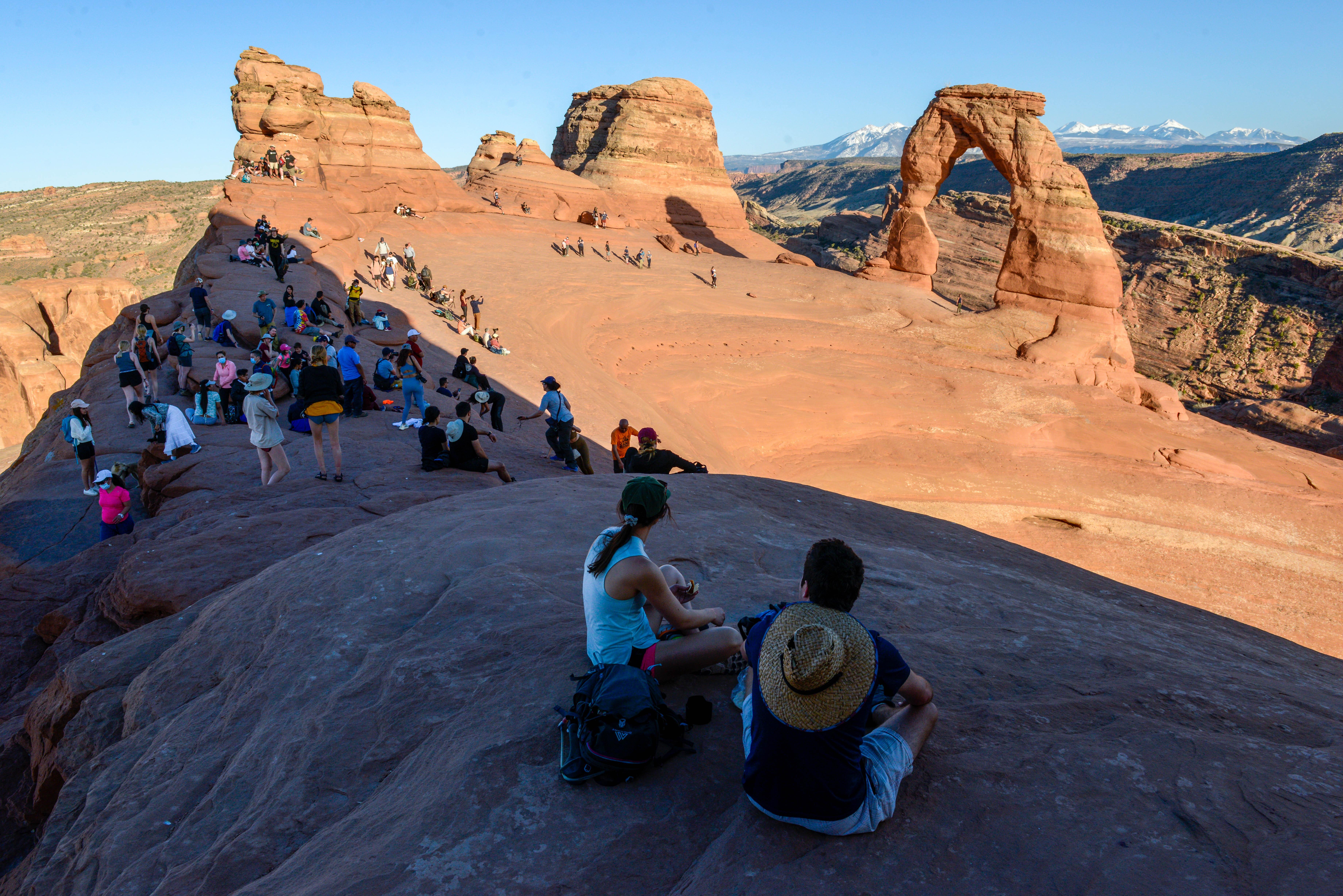
- Delicate Arch: Utah's iconic symbol featured on license plates
- Fiery Furnace: Permit-required labyrinth of narrow sandstone canyons
- Devils Garden Trail: 7.9-mile primitive loop accessing multiple arches
- Landscape Arch: North America's longest natural arch at 300+ feet
- Balanced Rock: 128-foot-tall gravity-defying formation
- Timed Entry System: Reservations required April-October (except mid-July to late August)
- Dark Sky Designation: Exceptional stargazing opportunities
Getting There
Arches National Park is located 5 miles north of Moab, Utah, along Highway 191, making Moab the essential gateway community for all park visitors.
From Major Cities
Salt Lake City (230 miles)
- Take I-15 South to I-70 East to Highway 191 South
- 4-hour drive through varied Utah landscapes
- Most common approach from northern states
Denver (350 miles)
- I-70 West through Colorado Rockies
- 5.5-hour scenic drive
- Popular route from eastern states
- Consider winter road conditions
Las Vegas (350 miles)
- I-15 North to I-70 East to Highway 191 South
- 5.5-hour drive through desert landscapes
- Alternative southern approach
Phoenix (420 miles)
- I-17 North to I-70 East via various routes
- 6.5-7 hour drive
- Scenic but lengthy desert crossing
Moab as Base Camp
Essential Services
- Full range of accommodations (motels to luxury resorts)
- Restaurants, grocery stores, and outdoor gear shops
- Hospital and medical services
- Gas stations and vehicle services
- Adventure tour companies and equipment rentals
Strategic Location
- 5 miles south of park entrance
- Also serves Canyonlands National Park (25 miles)
- Dead Horse Point State Park (30 miles)
- Numerous other red-rock attractions
Best Time to Visit
Arches experiences a high desert climate with extreme temperature fluctuations that can exceed 40°F in a single day.
Spring: April-May
Ideal Conditions
- Temperatures: 60-80°F (highs), 30-50°F (lows)
- Perfect hiking weather
- Wildflower displays in good years
- Clear, stable weather patterns
Challenges
- Peak visitation requires advance planning
- Timed entry reservations essential
- Higher accommodation costs
- Popular trails can be crowded
Fall: September-October
Excellent Weather
- Temperatures: 70-90°F (highs), 40-60°F (lows)
- Crystal clear skies common
- Comfortable camping conditions
- Stunning photography light
Considerations
- Still busy but less than spring
- Early October can be hot
- Late October may bring early cold snaps
Summer: June-August
Extreme Heat Challenges
- Temperatures regularly exceed 100°F
- Can reach 114°F in peak summer
- Midday hiking dangerous
- Violent afternoon thunderstorms
Advantages
- No timed entry reservations (July 7-August 27, 2025)
- Dramatic storm photography opportunities
- Early morning and evening hiking possible
- Lower accommodation rates
Winter: December-February
Cold Desert Conditions
- Temperatures: 30-50°F (highs), 0-20°F (lows)
- Snow and ice make trails treacherous
- Stunning stark beauty
- Nearly empty park
Special Requirements
- Traction devices essential for hiking
- Cold weather gear mandatory
- Limited daylight hours
- Services in Moab may be reduced
Timed Entry System
Due to overwhelming popularity, Arches has implemented a timed entry reservation system that fundamentally changes how visits must be planned.
When Reservations Are Required
Peak Season Requirements
- April 1 - October 31, 2025 (with exceptions)
- Daily between 7:00 AM - 4:00 PM
- Exception: July 7 - August 27, 2025 (no reservations needed)
Reservation Details
- $2 processing fee per vehicle (non-refundable)
- Books through Recreation.gov only
- Released 6 months in advance at 8:00 AM Mountain Time
- Popular dates sell out within minutes
- Limited next-day tickets released at 7:00 PM daily
Entry Requirements
Must Present Upon Arrival
- Timed entry reservation ticket (printed or screenshot)
- Government-issued photo ID matching reservation name
- Park entrance pass or payment
Important Notes
- Must arrive during reserved 1-hour window
- Once validated, can stay all day and re-enter
- No reservations needed before 7:00 AM or after 4:00 PM
- Reservations separate from entrance fees
Booking Strategy
Advance Planning
- Book exactly 6 months ahead when reservations open
- Have Recreation.gov account ready
- Be online precisely at 8:00 AM Mountain Time
- Have backup dates prepared
Alternative Approaches
- Early morning entry (before 7:00 AM)
- Late afternoon entry (after 4:00 PM)
- Mid-summer visit during no-reservation period
- Next-day tickets (very competitive)
Activities and Adventures
Arches offers hiking experiences ranging from easy walks to strenuous backcountry adventures, plus unique opportunities like the permit-required Fiery Furnace.
Essential Easy Hikes
Delicate Arch Viewpoints
- Lower Viewpoint: 100 yards, wheelchair accessible
- Upper Viewpoint: 0.5 miles, moderate difficulty
- Distant but impressive views of Utah's icon
- Good option for those unable to hike to the arch
Balanced Rock Trail
- 0.3 miles, mostly paved loop
- Circles the iconic 128-foot formation
- Excellent for families and quick stops
- Dramatic scale and geological interest
The Windows Section
- 1-mile loop visiting North Window, South Window, and Turret Arch
- Gentle gravel path with some stairs
- Massive arches showcase park's geological drama
- "Must-do" hike for first-time visitors
Double Arch
- 0.6 miles to tallest arch in park
- Flat trail suitable for all ages
- Two spans joining at one end create cavern-like space
- Children love exploring beneath the arches
Moderate Challenges
Park Avenue Trail
- 2 miles round-trip or 1 mile one-way
- Descends into canyon of towering monoliths
- "Urban canyon" experience with skyscraper-like formations
- Can arrange shuttle for one-way hike
Sand Dune and Broken Arch
- Sand Dune: 0.4 miles to shaded alcove
- Broken Arch: 1-2.3 miles depending on route
- Deep sand provides unique environment
- Good combination hikes from same trailhead
Strenuous Iconic Hikes
Delicate Arch Trail
- 3 miles round-trip, 538 feet elevation gain
- Utah's most famous hike to state symbol
- Sustained climb across exposed slickrock
- No shade—extremely dangerous in summer heat
- Final approach on narrow ledge with exposure
- Arch invisible until final reveal
Devils Garden to Landscape Arch
- 1.8 miles round-trip to longest arch in North America
- Well-maintained trail suitable for most hikers
- 300+ foot span creates stunning ribbon of stone
- Many visitors' turnaround point
Devils Garden Primitive Loop
- 7.9 miles total, extremely strenuous
- Rock scrambling, narrow fin traverses, exposure
- Must follow cairns across trackless slickrock
- Accesses Double O Arch, Private Arch, others
- Hike counter-clockwise for safety
- Not recommended when wet or icy
The Fiery Furnace
Unique Labyrinth Experience
- Dense maze of narrow sandstone canyons
- No designated trail—requires navigation skills
- Permit required ($10 self-guided, $16 ranger tour)
- Reservations through Recreation.gov
- Self-guided permits sell out in seconds 7 days in advance
- Ranger tours provide interpretation and navigation
Requirements
- All party members attend mandatory orientation
- Stay on bare rock or in sandy washes only
- GPS unreliable—compass and map essential
- Physically demanding with squeezing and scrambling
Geological Wonders
Understanding the park's geology enhances appreciation for its improbable beauty.
The Salt Bed Foundation
Underground Drama
- 300-million-year-old salt layer thousands of feet thick
- Salt more mobile than overlying rock layers
- Pressure causes salt to flow upward in domes
- Creates long, linear "salt anticlines"
- Stretches and cracks brittle sandstone above
The Perfect Sandstone
Entrada Sandstone Properties
- 140 million years old
- Formed from ancient desert dunes
- Perfect balance of hardness and brittleness
- Porous structure allows water penetration
- Salmon-pink color from iron oxide
Arch Formation Process
Three-Stage Development
- Fracturing: Salt movement creates parallel cracks
- Fin Formation: Erosion widens cracks, creates narrow walls
- Arch Creation: Continued erosion creates holes in fins
Ongoing Process
- Same forces creating arches will eventually destroy them
- Wall Arch collapsed in 2008 as dramatic reminder
- Landscape constantly evolving on geological timescale
Cryptobiotic Soil Crust
Living Ground Cover
- Complex community of bacteria, algae, lichens, mosses
- Binds soil together, prevents erosion
- Absorbs and retains precious desert rainfall
- Performs nitrogen fixation for plant nutrition
- Extremely fragile—recovery takes 50-250 years
- "Don't Bust the Crust" campaign emphasizes protection
Safety and Preparation
The high desert environment presents unique challenges requiring proper preparation and awareness.
Weather Hazards
Heat and Sun Exposure
- Carry minimum 2 liters water per person for any hike
- Wear sun protection including hat, sunglasses, sunscreen
- Avoid strenuous activity 10:00 AM - 4:00 PM in summer
- Heat exhaustion and heatstroke serious risks
Lightning and Flash Floods
- Sudden summer thunderstorms create lightning danger
- Avoid high ridges and exposed areas during storms
- Seek shelter in vehicle if possible
- Flash floods possible in normally dry washes
Winter Conditions
- Ice and snow make trails extremely treacherous
- Traction devices (microspikes/crampons) essential
- Delicate Arch final approach particularly dangerous when icy
- Weather can change rapidly
Terrain Hazards
Slickrock Challenges
- Smooth sandstone becomes extremely slippery when wet
- Easy to ascend, often difficult to descend
- Stay within abilities—many rescues involve "cliffed out" climbers
- Sturdy footwear with excellent traction essential
Trail Navigation
- Cell service limited to nonexistent
- GPS can be unreliable in narrow canyons
- Carry map and compass, know how to use them
- Stay on designated trails to protect cryptobiotic crust
- Follow cairns carefully in primitive areas
Desert Survival Essentials
The Ten Essentials (Desert Version)
- Navigation: Map, compass, GPS backup
- Sun Protection: Hat, sunglasses, high-SPF sunscreen
- Insulation: Layers for temperature swings
- Illumination: Headlamp with extra batteries
- First-Aid Kit: Including blister treatment
- Fire: Matches in waterproof container
- Repair Kit: Multi-tool, duct tape
- Nutrition: Extra food for energy
- Hydration: More water than you think you need
- Emergency Shelter: Space blanket or bivy
Lodging and Camping
Accommodation options center on Moab, with one primitive campground in the park itself.
Devils Garden Campground
Park's Only Camping
- 51 individual sites among slickrock fins
- 2 group sites for 11+ people
- Picnic tables and grills at each site
- Drinking water and restrooms available
- No showers or hookups
Reservation Requirements
- March 1 - October 31: Advance reservations required
- Book on Recreation.gov 6 months ahead
- Sites sell out immediately when released
- November 1 - February 28: First-come, first-served
Moab Accommodations
Budget Options
- Local motels: $80-150/night
- Chain hotels: $100-200/night
- RV parks and campgrounds
- Vacation rentals for groups
Mid-Range Hotels
- Red Cliffs Lodge: $150-250/night
- Hampton Inn & Suites: $180-300/night
- La Quinta Inn: $120-220/night
- Most include pools and breakfast
Luxury Resorts
- Sorrel River Ranch: $400-800/night
- Red Mountain Resort: $300-600/night
- Boutique properties with spa services
- Premium locations and amenities
Booking Strategy
Peak Season Planning
- Reserve accommodations 6+ months ahead
- Spring and fall book first
- Consider weekday visits for better availability
- Monitor cancellations for last-minute opportunities
Essential Information
Park Fees
- Vehicle Pass: $30 (7 days)
- Motorcycle: $25 (7 days)
- Individual: $15 (7 days)
- Annual Arches Pass: $55
- America the Beautiful Annual Pass: $80
- Timed entry reservation: $2 (separate fee)
Visitor Centers
Arches Visitor Center
- Located at park entrance
- Open year-round with seasonal hour variations
- Exhibits on geology, ecology, and cultural history
- Film, bookstore, and ranger information
- Mandatory orientation for Fiery Furnace permits
Special Regulations
Prohibited Activities
- Climbing on any named arch or formation
- Collecting rocks, plants, or artifacts
- Pets on trails (allowed on roads and in campground on leash)
- Drones throughout park
- Camping outside designated campground
Leave No Trace Principles
- Stay on trails and slickrock surfaces
- Pack out all trash
- Don't disturb cryptobiotic soil crust
- Respect wildlife and other visitors
Emergency Information
- Emergency Services: Call 911
- Park Emergency: Contact nearest ranger
- Limited cell service throughout park
- Nearest hospital in Moab (5 miles)
- SAR operations common—prevention key
Arches National Park rewards the prepared visitor with access to one of the planet's most spectacular geological galleries. The combination of extreme beauty and challenging environment demands respect, planning, and proper equipment. From the moment you make your timed entry reservation to the final sunset view from Delicate Arch, every aspect of the experience requires thoughtful preparation. Yet for those who come ready for the desert's challenges, Arches offers an encounter with deep time and natural artistry that will fundamentally alter how you see the relationship between stone, sky, and the forces that shape our world.
Real satellite imagery on NASA elevation — orbit the peaks at true scale.
Explore in 3D →What the park will quietly do to you.
Heat & Sun
SummerSummer highs can hit 100°F+ in many western parks. Carry 2 L of water per person minimum and avoid strenuous activity 10am–4pm.
Wildlife
Year-roundKeep 100 yards from bears and wolves, 25 from everything else. Never feed wildlife — it changes their behavior and ends with the animal euthanized.
Weather windows
SummerHigh-country thunderstorms build fast in summer afternoons. Plan to be off exposed ridges by noon, especially July–September.
Permits & timed entry
Plan aheadSeveral parks require timed-entry reservations or wilderness permits. Reserve weeks ahead via recreation.gov — same-day windows are limited.
Hero photo: NPS/Veronica Verdin